

Outlook in the World Economy
Throughout 2021, the world economy continued its recovery trend, driven by the good performance of international trade and the progress made in the vaccination programs. However, the recovery drive also pointed to a mixed trend between sectors and economies; the employment and production gaps remained in many countries, especially in emerging economies, where there are low vaccination rates compared to advanced economies.
Globally, FDI[1] flows reflect this: they rose 77% throughout 2021, reaching $1.65 trillion USD. Specifically, developed economies experienced a 199% growth compared to 2020, whereas emerging economies increased 30% compared to 2020, reaching a total of $870 billion USD.
As a result of the negative effects caused by the new COVID-19 variants, the expectations of growth for the world’s GDP were revised downward. According to the IMF[2], after growing 5.9% throughout 2021, GDP is expected to grow 4.4% in 2022 and 3.8% in 2023. Estimates indicate that advanced markets may recover their pre-pandemic growth trajectory in 2023, whereas emerging economies may face a drop in in foreign demand in light of new lockdowns.
The drop in demand in the face of the pandemic had a downward pressure on inflation throughout most of 2020. However, to deal with the economic impacts, central banks lowered their rates to boost economic activity, whereas governments implemented aid programs to stimulate their internal markets and face unemployment. These measures, along with the sudden increase in mobility and consumption, drove inflation levels to all-time highs in the second half of 2021.

If inflation is not curbed, a negative impact is expected in investment decisions due to higher financing costs, as well as the possibility of a global debt crisis, (227% of GDP in 2019 vs 256% in 2020[3]). For that matter, towards 2022 a tightening in the Monetary Policy is expected worldwide, with the purpose of coping with the constant inflationary pressures experienced.
On the other hand, the global situation faces an energy crisis that drove prices up to record levels. This came as a consequence of the unexpected growth in the demand for energy products, after a sudden drop at the beginning of the pandemic, the moderate energy upturn; the strong energy demand from China, as well as the natural disasters that affected coal production and the generation of energy from renewable sources.
In addition, during the last months of 2021, the reactivation of geopolitical tensions between Russia and Ukraine pushed the price of commodities and energy products to record levels not seen since 2014, creating additional financial volatility and uncertainty in light of a potential conflict.
In the end, the pandemic changed the dynamics of consumption and production worldwide, the sudden economic recovery led to an imbalance in the supply of production inputs, especially of semiconductors, which caused supply bottlenecks in key sectors throughout 2021. The demand for electronic devices increased, whereas automotive production and sales dropped. For that matter, the negative impacts on global value chains will continue to influence global trade patterns.
National Economy
In 2021, Mexico’s GDP[4] grew 5.0%. This came as a consequence of greater dynamism in the economic activity in light of increased vaccination rates, fewer restrictions to mobility during the first half-year, as well as due to the ongoing boost provided by foreign trade. Nevertheless, during the second half of 2021 the economic activity experienced a setback in its rate of recovery, as a result of the negative impacts on the domestic market caused by the third wave of infection in the country.
Based on the Regional Economic Activity Indicator produced by Banxico, during the third quarter of 2021 the economic activity interrupted its upward trend by dropping 0.4% compared to the previous quarter. This came as a result of the strong fall of the Services sector caused by changes regarding employment (outsourcing reform), the problems in the global value chains and constant inflationary pressures.
In 2021, the Foreign Direct Investment (FDI)[5] showed a total of $31.6 billion USD, which meant an 8.7% increase compared to the previous year. Internally, the FDI was made up as follows: reinvestment of earnings, 38.6%; new investments, 43.7% and accounts between companies, 17.7%.
In addition, in December 2021 the Monthly Indicator of Industrial Activity[6] (IMAI for its acronym in Spanish) increased 1.2% compared to the previous month.
Said increase was driven by the activities related to Energy Production, Manufacturing and Construction, which grew 2.4%, 1.9% and 0.8%, respectively. The only area reporting a setback was Mining, with 0.2%. Within manufacturing activities, despite the negative impacts on production, 17 out of 21 subsectors experienced growth, highlighted by the 10.4% increase in the Manufacturing of Transport Equipment, which reported three months of consecutive growth in its monthly comparison.
And so, in a context defined by recovery, there are factors that are capable of lifting the economic activity in the short- and medium-term. First of all, the positive margin in relation to the debt level provides breadth to extend the assistance in light of new waves of infection. Second of all, the regionalization trends furthered by the USMCA represent an opportunity for Mexico to reposition itself in the global value chains.
Having said that, the IMF[7] estimates 2.8% growth for 2022 and 2.7% for 2023, scenarios in which the outlook set forth maintains a high degree of uncertainty defined by the negative impact faced with new variants of the virus, inflationary pressures and a lower boost for foreign trade facing the reduced drive in the US economy.

Real Sector
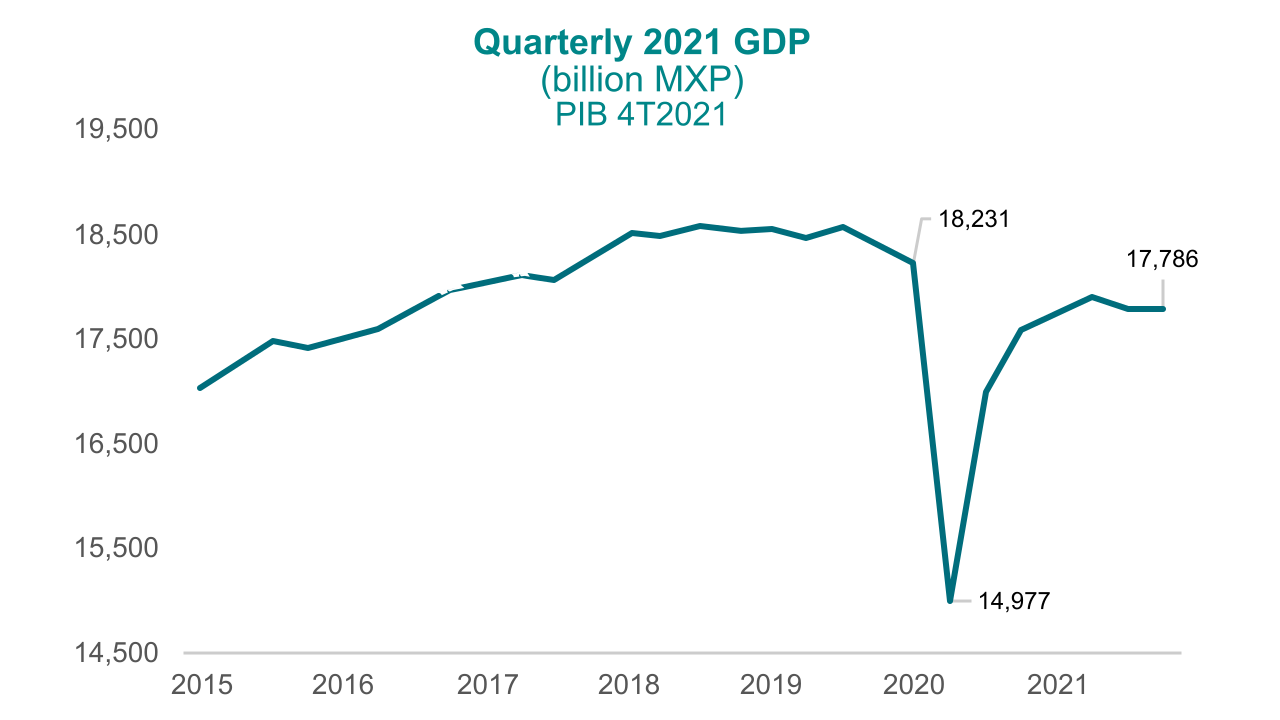
In 2021 Mexico’s GDP increased 5.0% annually[8]. The Primary sector grew 2.6%, the Secondary sector 6.8% and the Tertiary sector 4.2%. With regard to the fourth quarter of 2021, GDP did not report any variation in its quarterly comparison. Within the country, the activities related to services recorded a 0.6% drop compared to the previous quarter, which had an impact on the domestic economic activity, given that it contributes a little over 60% of total GDP. Meanwhile, secondary activities grew 0.4%, whereas primary activities grew 0.2%.

Source: Generated by Bancomext with information from INEGI
Employment
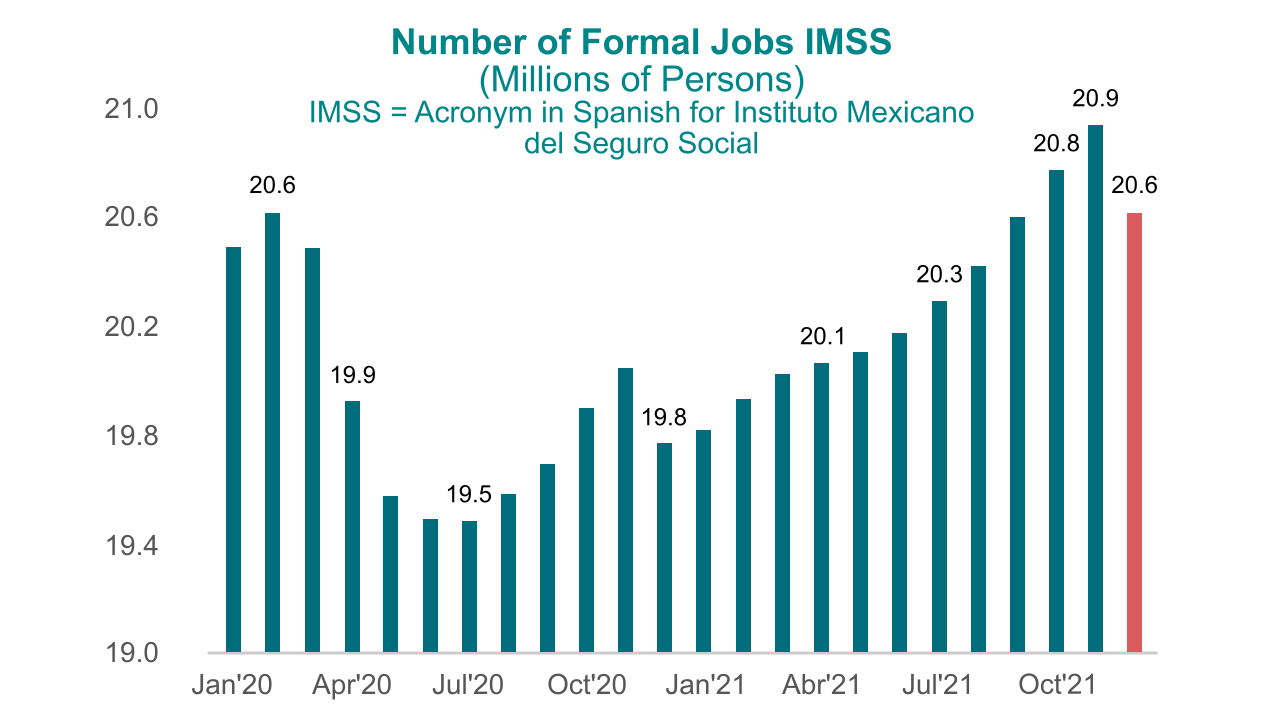
According to Mexico’s Social Security Institute (IMSS for its acronym in Spanish)[9], throughout 2021 an increase of 846,416 jobs was reported, which represents an annual increase of 4.3%, the highest growth in IMSS’s history. However, in December a monthly drop of 312,902 workers was reported, i.e. a monthly reduction of -1.5%. And so, as of December 31st of 2021, 20,620,148 workers were reported, of which 87% corresponds to Permanent jobs and the remaining 13% to Temporary jobs.

The economic sectors with the best performance in terms of job creation were Transportation and Communications (11.0%), Extractive industries (8.1%) and Construction (7.0%). As to the best-performing federal states, Tabasco, Quintana Roo and Baja California stand out, with increases above 12% in all three cases.

Source: Generated by Bancomext with information from INEGI and STPS
Inflation and Exchange rate
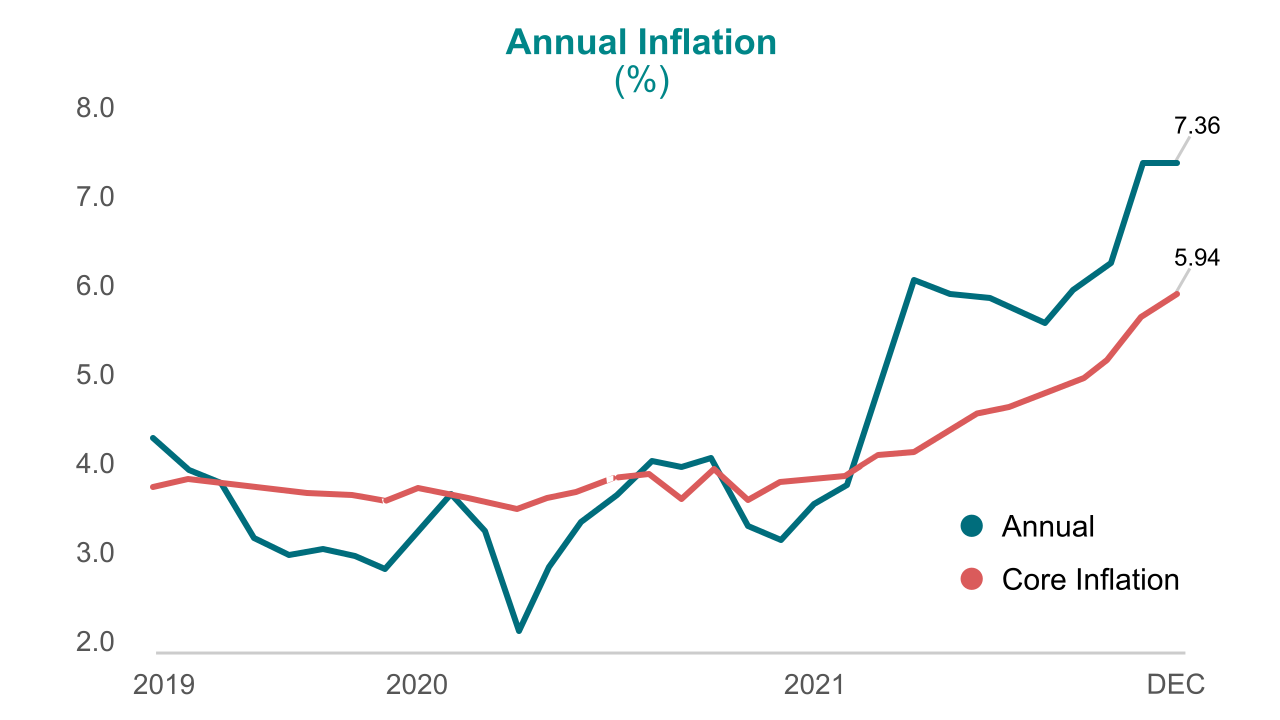
With monthly data from the end of December, inflation[10] reached 7.36% in its annual comparison and 0.36% compared to the previous month. The increase was led by the Non-Core Inflation indicator, which reported an annual variation of 11.79%, as a result of the inflation in the price of Fruits and Vegetables (21.73%) and Energy products (11.50%). Meanwhile, the Core Inflation indicator, which excludes from its calculations the goods and services with more volatile prices, rose 5.94%. In this way, inflation went nine months in a row beyond the Central Bank’s target range, which is why Banxico is expected to continue raising the interest rate, set at 5.5% by the end of 2021.
On the other hand, during the second half of 2021, the exchange rate experienced an important increase, moving from 20.03 MXN/USD in June (monthly average) to 20.89 MXN/USD in December of the same year, which represents a 4.3% increase in six months. This came as a result of movements in the currency and stock markets faced with the COVID-19 Omicron variant, which stepped up the infections around the world and modified the outlook of global economic recovery.

Source: Generated by Bancomext with information from INEGI and Banxico
Financial Sector
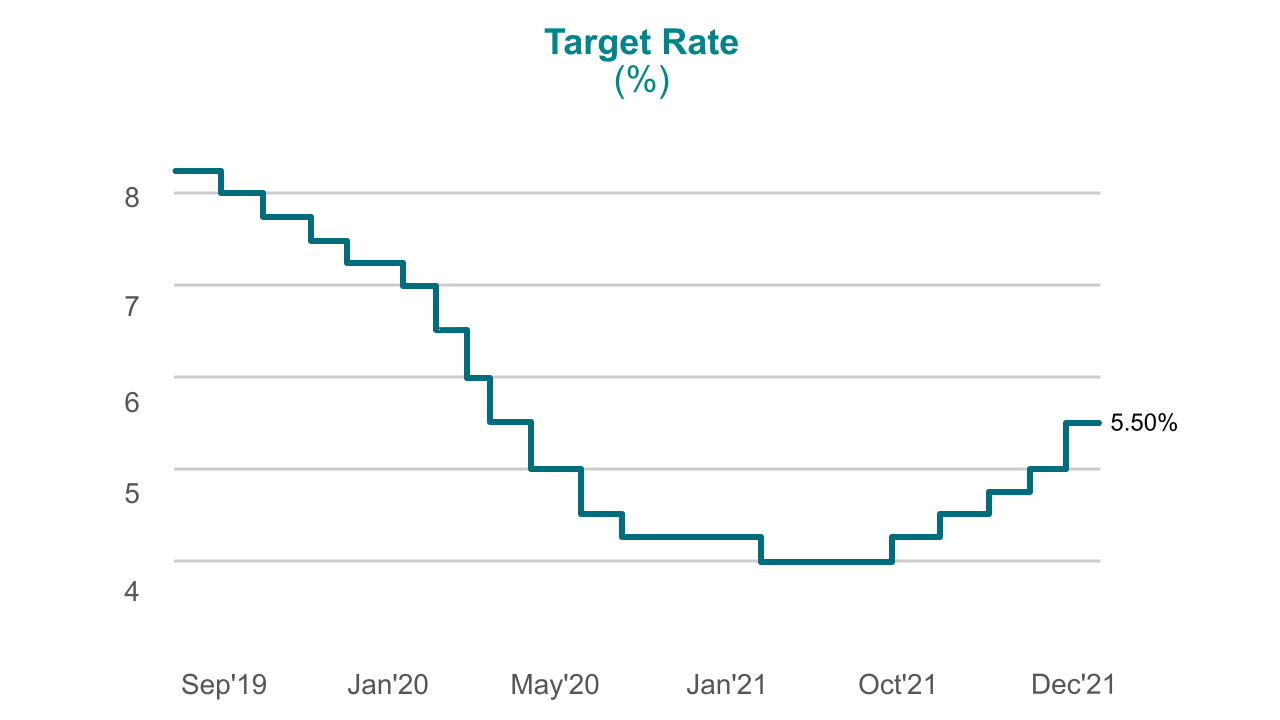
In a context of high inflation, on December 16th 2021 the governing body of Banco de México decided to increase by 50 basis points the objective for the Interbank Interest Rate to 5.5%. According to Banxico, global inflation continued to rise, pressured by the production bottlenecks, the restructuring of expenditure towards goods, the high prices of foods and energy products, and the recovery of some services. This way, it was deemed necessary to reinforce the monetary policy stance in order to avoid negative impacts on inflation expectations, as well as to achieve an orderly adjustment of relative prices and favor the alignment of inflation to the 3% +/- 1% goal[11].
On the other hand, the 28-day Interbank Offering Rate (TIIE for its acronym in Spanish) averaged a 5.44% rate in the month of December, while the yield rate for 28-day Federal Treasury Securities was 5.29%[12].
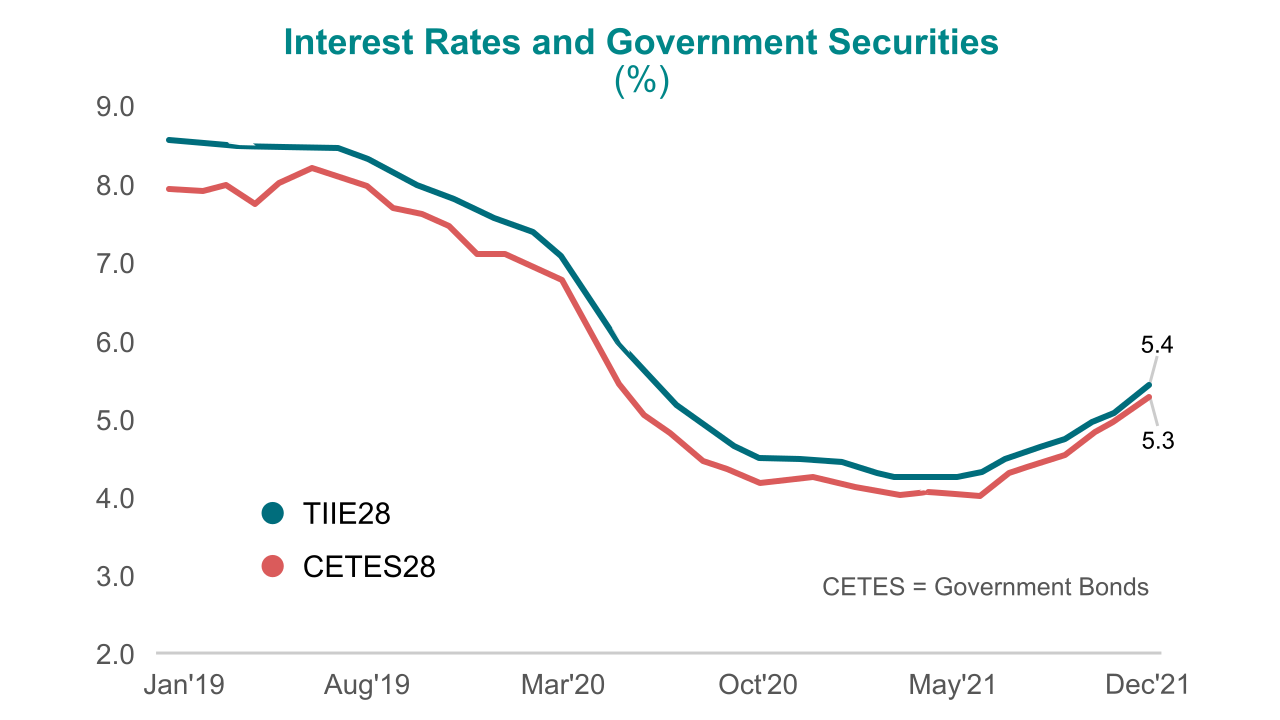
Source: Generated by Bancomext with information from Banxico
Foreign Sector
Throughout 2021, despite the problems related to global value chains, foreign trade continued to provide an additional thrust to the economic activity, managing to surpass pre-pandemic levels[13]. This way, total trade (exports plus imports) reached a value of $999.9 billion USD, an amount 9.2% higher than the one recorded in 2019 and 25.0% higher compared to 2020.
Domestically, exports reported a total of $494.2 billion USD, which meant an annual increase of 18.5%, whereas imports grew 32.0%, reaching a value of $505.7 billion USD.
On the other hand, in December of 2021 exports rolled back 0.10% compared to the previous month (m/m), reaching a total of $47.7 billion USD. This was due to the 8.05% drop in oil exports, whereas non-oil-related exports grew only 0.43%.

As to imports, these reached $47.1 billion USD and grew 4.86% (m/m), as a result of a 4.72% increase in non-oil-related imports and a 5.99% increase in oil imports. By type of good, there were spikes (m/m) in consumer goods (7.72%) and in intermediate goods (4.92%), whereas capital goods fell 0.09%. Compared to December 2020, exports grew 10.8% and imports 27.7%.


Fuente: Elaborado por Bancomext con información del INEGI y Banxico.
1 — UNCTAD, January 2022, https://unctad.org/news/global-foreign-direct-investment-rebounded-strongly-2021-recovery-highly-uneven
2 — IMF, World Economic Outlook, January 2022, https://www.imf.org/es/Publications/WEO/Issues/2022/01/25/world-economic-outlook-update-january-2022
3 — IMF, Diálogo a Fondo, December 2021, https://blog-dialogoafondo.imf.org/?p=16730
4 — INEGI, Seasonally adjusted figures, February 2022 https://www.inegi.org.mx/default.html
5 — Secretaría de Economía, Press release Nr. 009 https://www.gob.mx/se/prensa/mexico-atrae-31-621-2- millones-de-dolares-de-ied-de-enero-a-diciembre-de-2021
6 — INEGI, Monthly Indicator of Industrial Activity, December 2021 https://www.inegi.org.mx/temas/imai/
7 — IMF, World Economic Outlook, January 2022 https://www.imf.org/es/Home
8 — INEGI, Seasonally adjusted figures, February 2022 https://www.inegi.org.mx/default.html
9 — Mexico’s Social Security Institute, Monthly press release, December 2021 http://www.imss.gob.mx/sites/all/statics/i2f_news/PR%20009.pdf
10 — INEGI, Consumer Price Indexes, December 2021 https://www.inegi.org.mx/default.html
11 — Banxico, Announcement of Monetary Policy, December 2021 https://www.banxico.org.mx/publicaciones-y-prensa/anuncios-de-las-decisiones-de-politica-monetaria/%7B8AAB504C-49F8-6625-F48C-D0B48F9291E2%7D.pdf
12 — Banxico, reference rates and prices, December 2021 https://www.banxico.org.mx/
13 — INEGI, Trade Balance final figures, December 2021 https://www.inegi.org.mx/